
For clinicians
 for clinicians
Powered by Nightingale
Longitude is the Nightingale Health metabolomic health check, delivered across the Channel Islands, Gibraltar, the Isle of Man, Bermuda and Cayman by Archipelago Health. From a single blood sample it returns ten-year risk scores for heart attack, ischaemic stroke, type 2 diabetes, chronic kidney disease and fatty liver disease, alongside a full lipid and metabolic panel.
This page sets out what it measures, how the models were built, and what it can and cannot tell you.
1. The metabolome
The genome is the genetic fingerprint. It is fixed at conception and is the same at eight years old as at eighty. It describes predisposition.
The metabolome is the biological fingerprint. It is the complete set of small molecules produced by metabolism: lipids and lipoprotein particles, amino acids, fatty acids, ketone bodies, glycolysis intermediates and inflammation markers. It describes the present state of the organism, and it changes with weight, diet, alcohol, sleep, exercise, medication and disease.
That difference matters clinically in two ways. A genetic result cannot be acted on and re-measured; a metabolic profile can. And a genetic result describes risk conferred at birth, whereas the metabolome carries the accumulated effect of everything since, which is where most modifiable cardiometabolic risk actually sits.
Every tissue and biofluid has a metabolome. Longitude measures the circulating metabolome, in plasma or serum, because blood perfuses every organ and therefore carries an integrated signal from the whole body rather than from one compartment.
2. NMR spectroscopy
Longitude is measured by nuclear magnetic resonance spectroscopy, the same physics as an MRI scanner applied at molecular rather than anatomical scale. NMR spectrometers are large, superconducting, cryogen-cooled research instruments. Nightingale Health run their own NMR laboratory network, with sites in Finland, the United Kingdom, New York, Singapore and Tokyo, on a single standardised protocol.
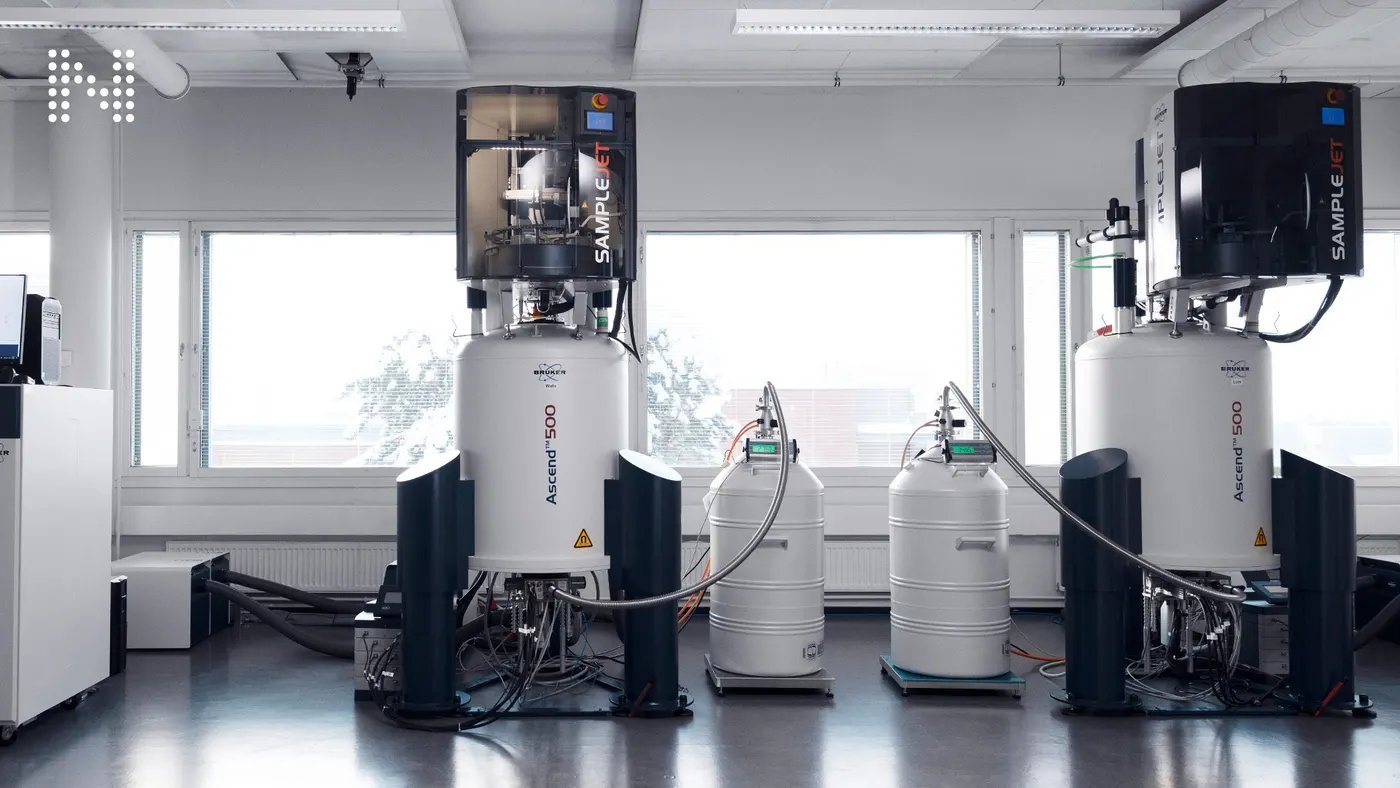
The sample sits in a strong magnetic field. Hydrogen nuclei align with it, are displaced by a radiofrequency pulse, and as they return to alignment emit a signal at a frequency determined by their precise chemical environment. Every metabolite produces a characteristic pattern of peaks, and the area under each peak is proportional to how much is present.
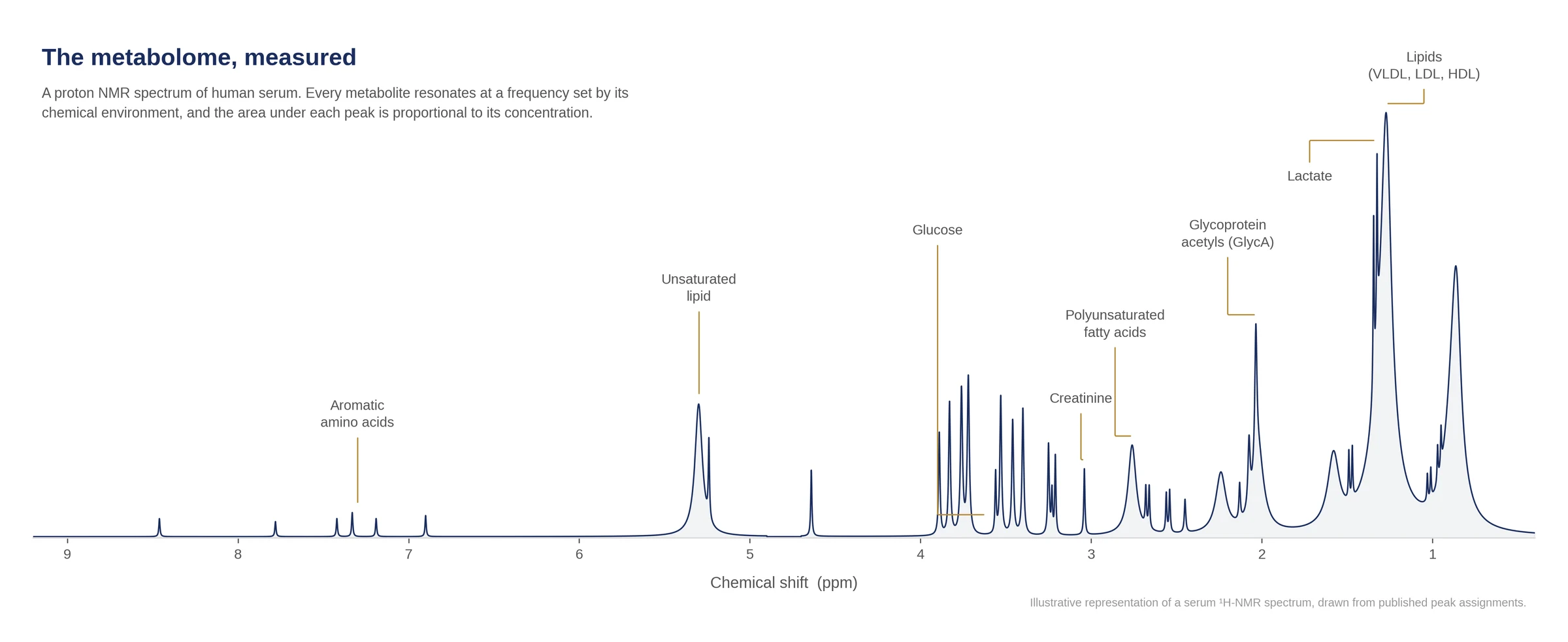
Two consequences matter clinically. The spectrum contains every detectable metabolite simultaneously, so one sample and one run produce the whole panel with no incremental cost per marker. And results are reported in absolute concentrations, in real units, not as relative intensities or normalised scores. That is what allows a model coefficient derived in one population to be applied unchanged in another, and a result taken in 2026 to be compared directly with one taken in 2031.
For venous samples the coefficient of variation is below 5% for the majority of biomarkers, comparable with well-regulated accredited clinical laboratories, and the same calibration applies wherever in the world the sample was taken.
3. Biobanks
A biobank is an organised repository of human biological material held for research, collected with consent. Not only blood: plasma, serum, DNA, urine and solid tissue of various types, stored under controlled conditions, often for decades.
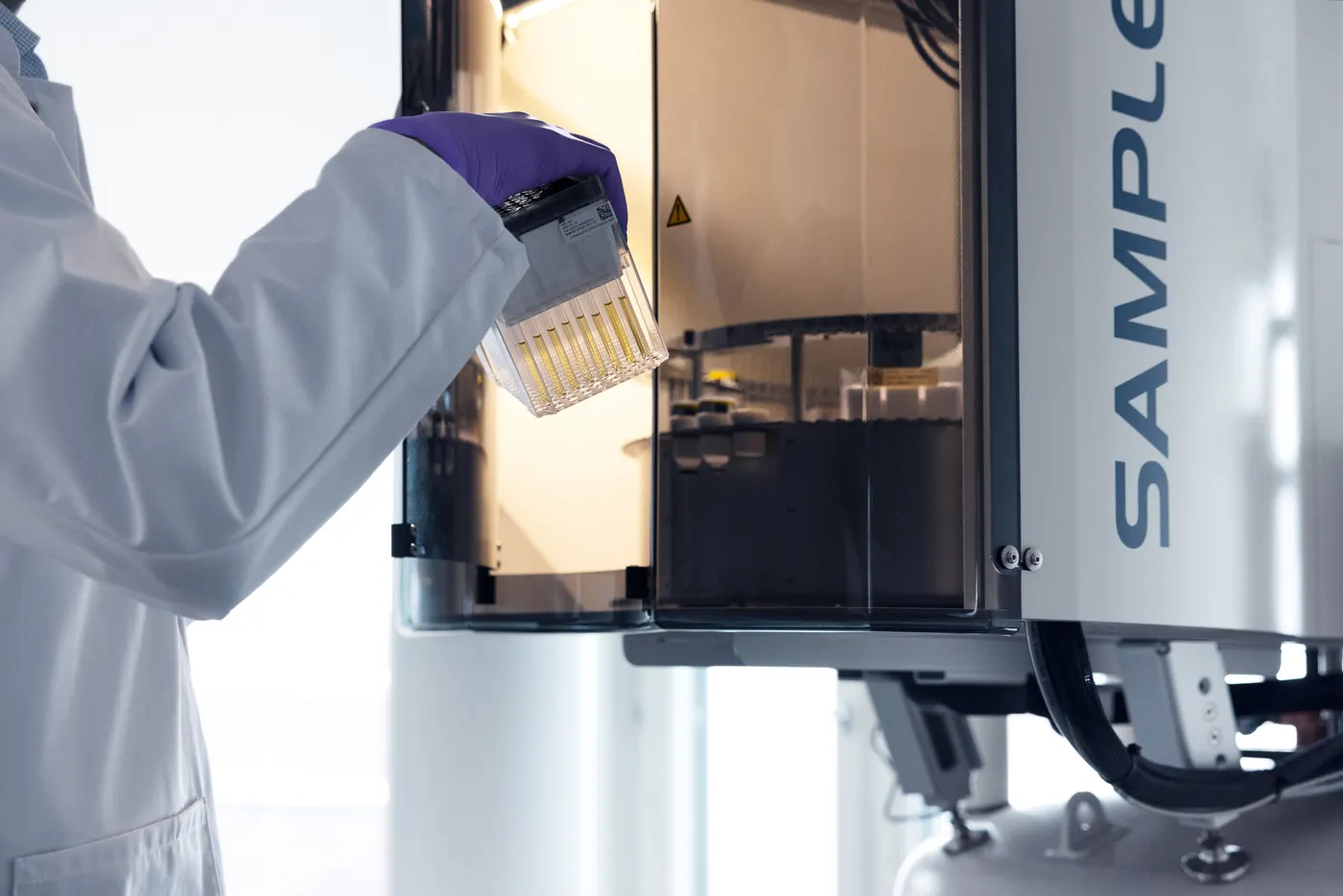
The UK Biobank is the largest in the world. It recruited approximately 500,000 healthy volunteers aged 40 to 69 between 2006 and 2010. Each sample is linked to the respective donor’s NHS record, so hospital admissions, cancer registrations and deaths accrue against each participant prospectively. The cohort now carries fifteen to twenty years of hard outcome data attached to blood drawn before any of those events occurred.
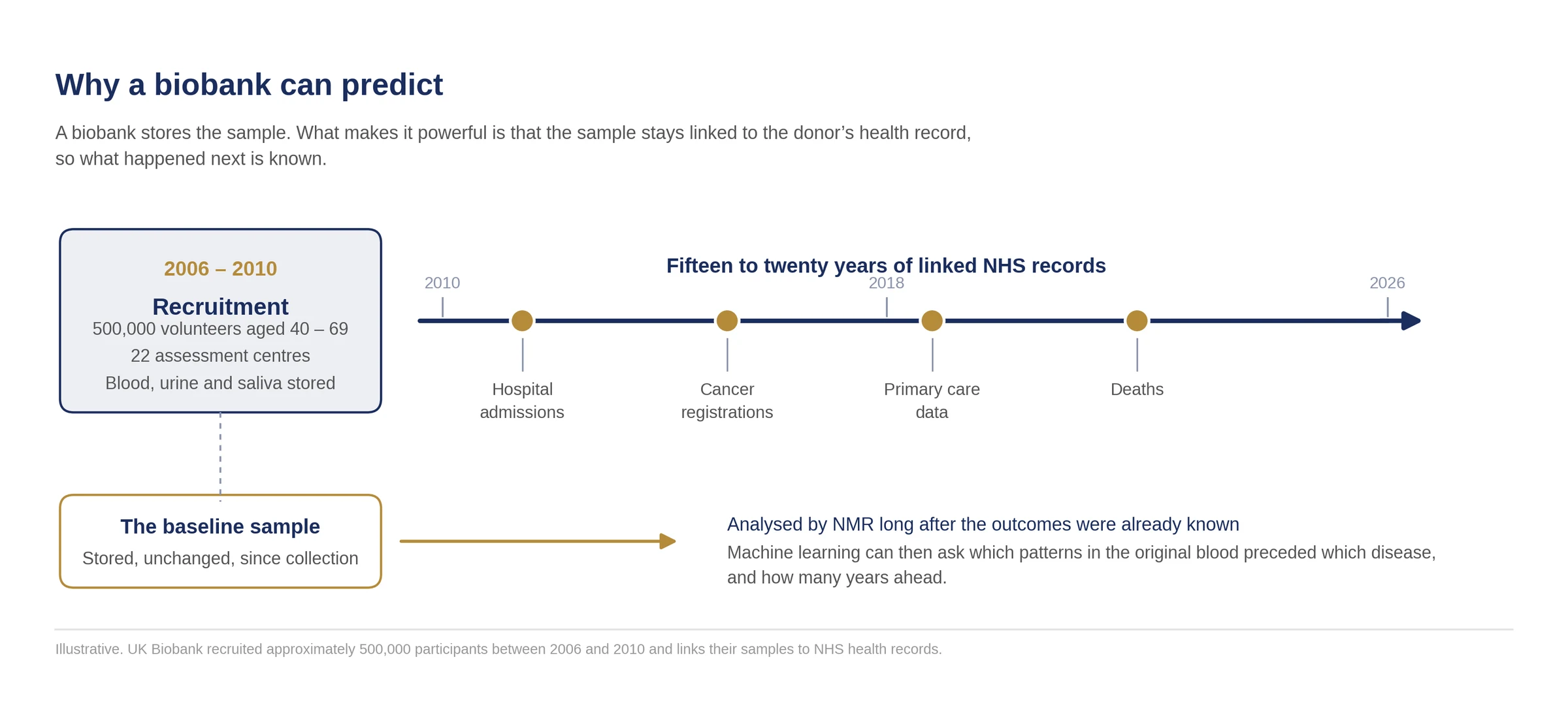
That is the precondition for prediction. You need the baseline sample, and you need to know what happened next.
The models are trained and validated across more than a million participants in at least fourteen international biobanks, with UK Biobank, the Estonian Biobank and the Finnish biobank network as the core. More than 900 peer-reviewed papers have been published using the platform.
4. How the risk models were built
Nightingale carried out the NMR metabolomic analysis of the UK Biobank plasma samples, completing the full 500,000 in 2024, and has done the same for the Estonian and Finnish national biobanks.
Having both the measurements and the linked outcome records, they applied machine learning to identify which patterns of biomarkers precede which diseases, and how far ahead. Individual markers had been associated with individual conditions for decades. What was new was the ability to read the whole profile at once, across hundreds of thousands of people with known outcomes, and find the combinations that matter. Those patterns became the predictive algorithms.
The models have since been tested by research groups with no connection to the company, and validated in cohorts entirely outside the training data, including Whitehall II, the Rotterdam Study, the Leiden Longevity Study, PROSPER, the Hong Kong Diabetes Biobank and the German ESTHER cohort.
5. What it does that current tools cannot
Cardiovascular disease and type 2 diabetes: as good, but much easier.
Against QRISK3 and QDiabetes the metabolomic scores perform comparably. However, QRISK3 requires age, sex, ethnicity, smoking status, diabetes and family history, a current blood pressure, a treated-hypertension flag, a BMI and a cholesterol ratio, with the appointment, measurement and data entry that implies.
The metabolomic score requires a blood sample, age and gender – nothing else. No family, medical or social history, no examination, no repeat visit, no assumption that the record is complete. For a population-scale programme that difference is the whole difference. Not because the prediction is better, but because it can actually be delivered to everybody.
Health economic modelling in Finland supports this. A metabolomic health check compared against the current FINRISK and FINDRISC standard was dominant in the base-case scenarios, more health at lower cost, and released substantial clinical capacity.
What each one asks you for
Both estimate ten-year cardiovascular risk. They differ in what has to be gathered before they can.
QRISK3
22 data items
About the person
- Age
- Sex
- Ethnicity, from nine categories
- Postcode, for a deprivation score
- Smoking status, from five categories
- Family history of heart disease in a first degree relative under 60
Conditions and medicines
- Type 1 diabetes
- Type 2 diabetes
- Treated hypertension
- Chronic kidney disease, stage 3, 4 or 5
- Atrial fibrillation
- Migraine
- Rheumatoid arthritis
- Systemic lupus erythematosus
- Severe mental illness
- Atypical antipsychotic medication
- Regular corticosteroids
- Erectile dysfunction, in men
Measurements
- Total cholesterol to HDL ratio
- Systolic blood pressure
- Variability of repeated blood pressure readings
- Body mass index, from height and weight
Longitude
3 data items
Everything required
- Age
- Sex
- One blood sample
Venous or finger-prick.
No fasting. No blood pressure reading.
No questionnaire. No repeat visit.
The two perform comparably at predicting cardiovascular risk.
This is not a claim about accuracy. It is a comparison of what has to be collected, and of how many people can realistically be screened as a result.
Chronic kidney disease and fatty liver disease: where there is no comparator.
These are the distinctive outputs, because no established primary care risk tool exists for either.
Chronic kidney disease is currently identified by eGFR, serum creatinine and urinalysis, a measure of function already lost rather than a forward risk estimate. Fatty liver disease is flagged by liver enzymes, which are insensitive and non-specific for steatosis. The metabolomic models outperform both, and do so prospectively.
Both conditions are common, silent until late, and substantially modifiable when found early. Neither is systematically screened for in general practice.
6. Two sampling routes
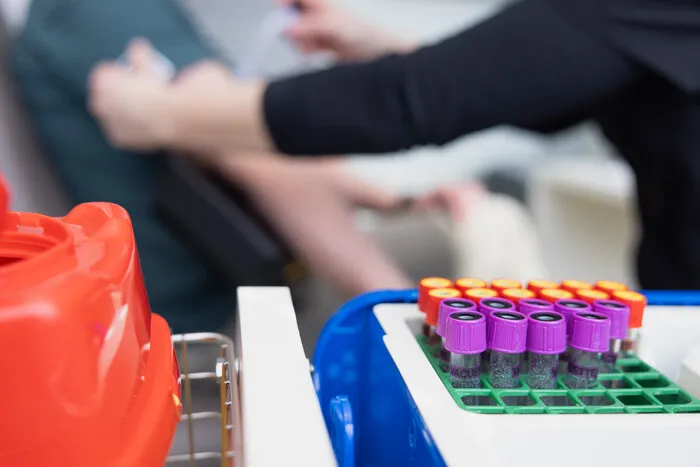
Venous, the main route. A standard draw, taken on the same run as any other blood test. No kit, no consumable stock, no cold chain, no change to the phlebotomy round. It slots into what providers already do rather than running alongside it.
Dried blood spot, the second route. A finger-prick sample onto a card, needing no phlebotomist, no centrifuge and no laboratory at the point of collection. Kit shelf life of 8 to 12 months, sample stable for up to 21 days at temperatures up to 50 degrees Celsius, posted at ambient temperature.
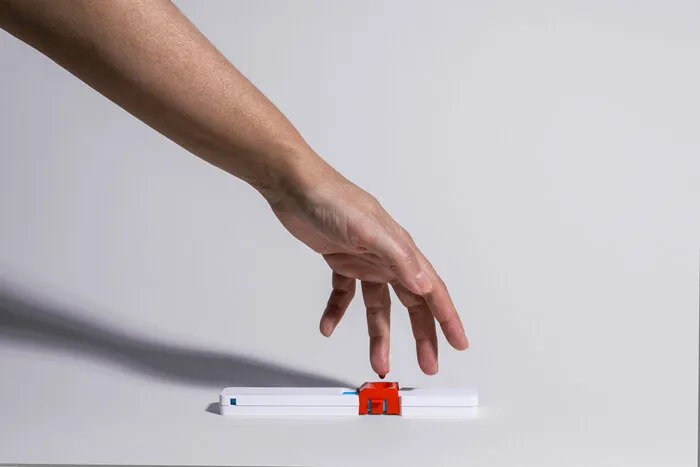
Those properties make it viable where the venous route is not: a workplace screening day with no on-site laboratory, a remote community, an outer island, a patient who cannot easily attend. It can be collected almost anywhere in the world with a postal service.
Both routes are analysed on the same platform and return the same report.
7. The report
The report returns to the ordering clinician, in the patient’s name, and is designed to be read with the patient rather than sent to them.
It gives ten-year risk scores for the five conditions, each against an age- and sex-matched reference population, together with up to 39 individually reported biomarkers, including the full lipid panel, ApoB and ApoA1, lipoprotein particle concentrations and sizes, Lp(a), glycoprotein acetyls as an inflammation marker, amino acids, fatty acid composition, ketone bodies and glucose.
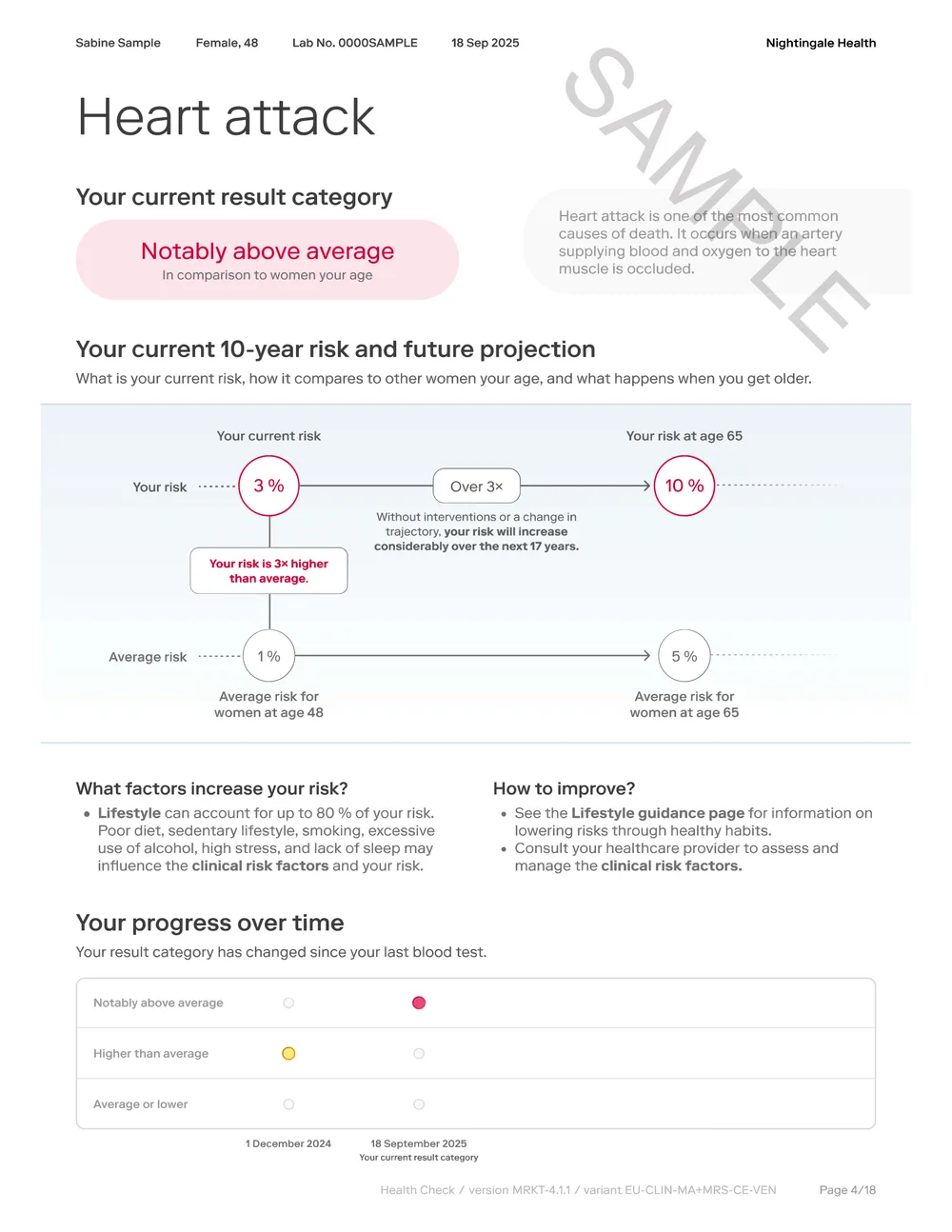
Because the metabolome is modifiable, the natural shape of the consultation is: what the profile shows, which contributing markers are movable, what intervention is indicated, and when to re-test to see whether it worked.
Every partner clinician is trained before their first patient, and we provide the AH Clinical Interpretation and Action Guide covering risk categorisation, recommended action at each level, and the common consultation scenarios.
Request the Clinical Interpretation and Action Guide8. What it does not do
- It is not a diagnostic test. It stratifies risk. A high score indicates investigation and intervention, not a diagnosis, and a low score does not exclude disease.
- It is not a genetic test.
- It does not replace clinical examination or any existing screening programme.
- It is not a general cancer screen.
9. Different populations
A fair question from any clinician working in a diverse community is whether a model built largely in a European cohort transfers.
Two features make this platform more transferable than most. The biomarkers are reported in absolute concentration units rather than cohort-normalised scores, so the same coefficients apply in a new population without recalibration. And ethnicity is not an input variable. QRISK3 carries explicit ethnicity coefficients precisely because the clinical inputs it uses do not capture the differences. The working principle here is the opposite: population differences in cardiometabolic risk are themselves expressed in the metabolome, so they are already in the measurement.
Nightingale NMR data have been generated, and cohort analyses carried out, across European, East Asian, South Asian, North American and sub-Saharan African populations, including Biobank Japan, the Hong Kong cohorts, the Multi-Ethnic Cohort Singapore, the South Asia Biobank, the Bangladesh BELIEVE Study, the Mass General Brigham Biobank and Malawi Healthy Lives. These deployments and analyses have demonstrated cross-racial applicability of the risk stratification.
The honest caveat. No published validation cohort composed specifically of Afro-Caribbean populations, at anything like UK Biobank scale, exists. That is a recognised gap in the field rather than one specific to this platform: it affects every cardiometabolic risk prediction tool in use, and QRISK3 is known to perform poorly in Afro-Caribbean populations despite carrying an ethnicity term.
Our position is straightforward. The structural argument above, and the breadth of the existing base, give good reason to expect the stratification to hold. We say expect rather than know, because that is the state of the evidence. Deployment in Bermuda and the Caribbean is an opportunity to help close that gap rather than inherit it.